
Damp Proofing
Damp problems are often misunderstood, and incorrect diagnosis can lead to unnecessary work and ongoing issues. At Bristol Damp Solution, we focus on identifying the true cause of damp before recommending the most effective, long-term solution for your property.
Damp Proof Courses & Rising Damp Explained
A damp-proof course (DPC) is a horizontal barrier built into a wall to prevent moisture from rising up through the structure by capillary action — a process commonly referred to as rising damp.
A damp-proof membrane (DPM) performs a similar role for solid floors, stopping moisture from travelling upwards from the ground.
Rising damp is most often associated with:
A missing damp-proof course (common in older buildings)
Bridging caused by raised external ground levels or internal floor finishes
Alterations that allow moisture to bypass an existing DPC
Does Rising Damp Really Occur?
In practice, damp-proof courses rarely fail. What is often diagnosed as rising damp is more commonly caused by:
Condensation from everyday living
Penetrating damp from issues such as leaking gutters, defective drains, cracked masonry, or porous brickwork
External ground levels sitting higher than internal floor levels
A proper diagnosis is essential. Treating damp without identifying the true cause can lead to unnecessary work and ongoing problems.
Other contributing factors that can influence moisture movement within walls include:
Groundwater availability
The porosity and pore size of masonry materials
Wall thickness and construction type
Rising Damp Treatment Options
Where rising damp is correctly identified, several effective treatment methods are available. The most suitable option depends on the construction and condition of the property.
Chemical Damp-Proof Course Injection
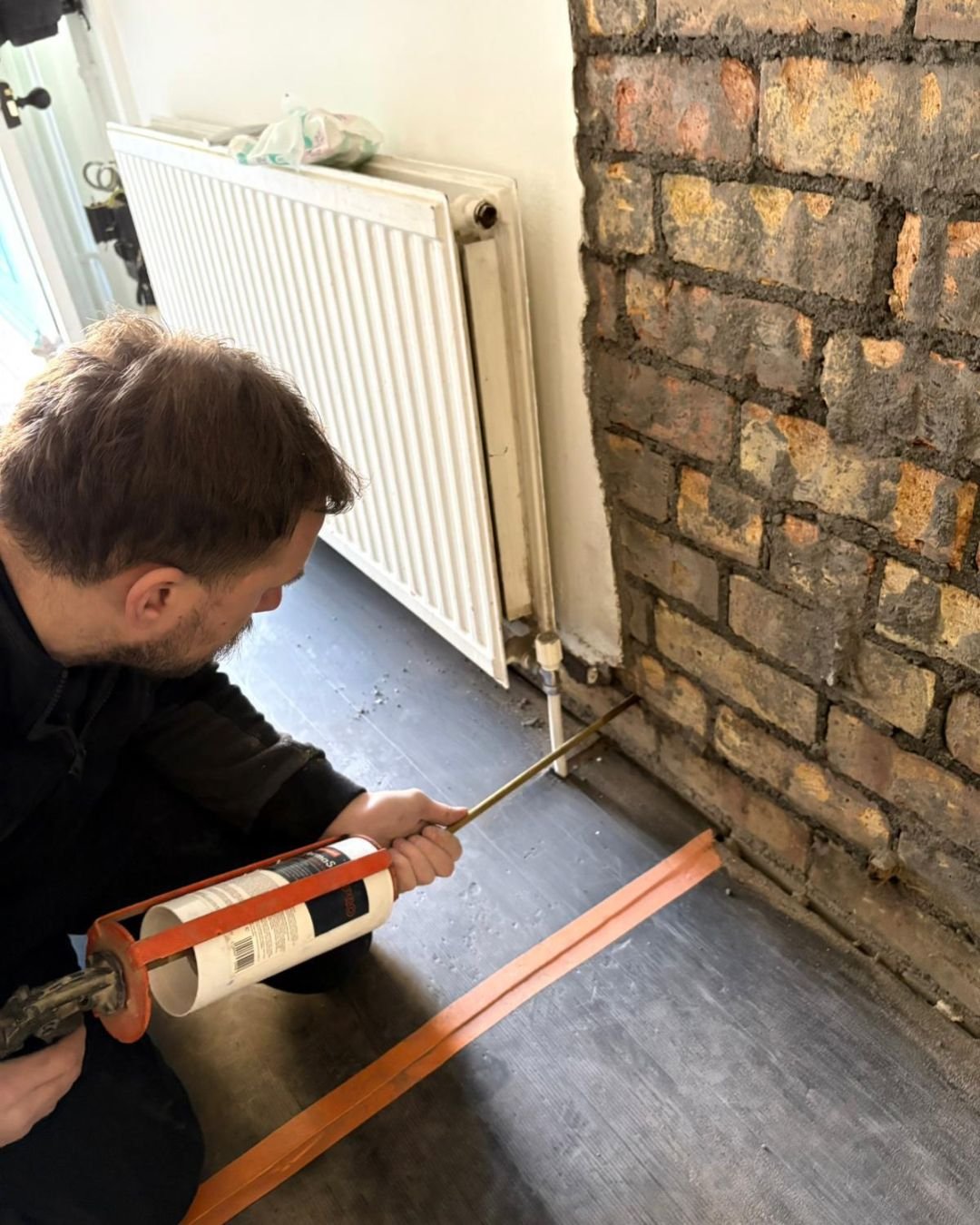
This is the most common treatment and is suitable for most wall types. A specialist chemical (liquid or cream) is injected into a series of drilled holes along a continuous line in the wall, forming a new damp-proof barrier once cured.
Injection Cream Systems
Ideal where mortar joints are clearly visible, injection creams are installed under low pressure. The cream disperses through the mortar and masonry before crystallising to create an impermeable barrier against rising moisture.
Electro-Osmotic Damp Proofing
In certain cases, an active electro-osmotic system may be recommended. This uses a small electrical charge to repel moisture downwards, away from the wall structure.
Physical Damp-Proof Membranes
Where appropriate, a physical membrane can be installed to form a permanent damp-proof barrier, although this method is more disruptive and typically used in specific circumstances.
Associated Plasterwork & Salt Contamination
After damp-proofing works, salt-contaminated plaster must be removed. If salts are left in place, they can continue to attract moisture from the air, creating the appearance of ongoing damp even after successful treatment.
We replace affected plaster with specialist salt-retardant systems designed to prevent moisture reactivation and ensure a long-lasting, dry finish.
Professional Damp Treatment in Bristol and the South West
At Bristol Damp Solution, our fully qualified and experienced surveyors specialise in the accurate diagnosis and treatment of rising damp.
Following a detailed property survey, we will:
Confirm the true cause of dampness
Explain our findings clearly and honestly
Recommend the most appropriate, cost-effective solution for your property
Our approach focuses on correct diagnosis first, ensuring you receive the right treatment — not unnecessary work.